![]() |
| News | About us | Director | Publications | Conferences | Seminars | "Tigers" | Contact | Links | Site map |
Professor Grzegorz W. Kolodko - Publications |
|
GWK
News |

Professor Grzegorz W. Kolodko
LIST OF PUBLICATIONS IN ENGLISH (You can access some
of my papers on the TIGER website through the following URL: www.tiger.edu.pl/english/kolodko/publikacje.htm
Kolodko, Grzegorz W. (2013) “The Great Transformation 1989-2029”, in: Paul Hare and Gerard Turley (eds.), “Handbook of the Economics and Political Economy of Transition”, Routledge, London and New York, pp. 456-467. ____ (2013). "A Two-thirds Rate of Success. Polish Transformation and Economic Development, 1989-2008", chapter 13 w: Augustin Fosu (ed.), Development Success: Historical Accounts from More Advanced Countries, Oxford University Press, Oxford, pp. 277-307. ____ (2012). "A World Between Crises", Acta Oeconomica, Vol. 62 (1), pp. 3-13. ____ (2012). "Economics and Politics in a Volatile
World", Emirate Lecture Series, 95 (May), The
Emirates Center for Strategic Studies and Research, Abu Dhabi, p. 38. ____ (2012). "Introductory Remarks" in: Joschka Fischer,
"The Euro Crisis – A Political or Financial Challenge? ", Distinguished Lectures
Series, No. 22, Kozminski University (ALK), Warsaw, p.
1. ____ (2012). "Economic Crisis or Crisis in Economics?", Messenger of the International Nobel Economic Forum, No. 1 (5), p. 215-223.
____ (2012). "ECB must rescue Greece – or pay more later", Financial Times, February 22.
____ (2011). "Truth, Errors and Lies. Politics and Economics in a Volatile World", Columbia University Press, New York, XII + 460 p.p.
____ (2011). "Neoliberalism, World Crisis, and the New Pragmatism", The European Financial Review, October-November, p. 2-6.
____ (2011). "Neoliberalism, the Global Crisis, and the Ways Out", Rivista di Economia Politica, No. 3 (VII-IX), p. 153-166.
____ (2011). "Truth, Errors and Lies", interview, The European Financial Review, August – September, pp. 2-5.
____ (2011). "Private sector role essential in Greek drama", Financial Times, June 22.
____ (2011). "Poland’s lesson for Greece",The Economist, May 12th.
____ (2011)."The Warsaw Initiative", Let’s Talk Development. A blog hosted by the World bank Chief Economist, 11 May(http://blogs.worldbank.org/developmenttalk/the-warsaw-initiative).
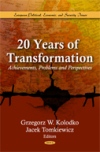
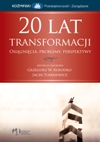
____ (2011) "20 years of Transformation: Achievements, Problems and Perspectives", co-author and co-editor with Jacek Tomkiewicz, Nova Science, New York, p. 292.
____ (2011) "Introduction", in: Grzegorz W. Kolodko and Jacek Tomkiewicz (ed.) "20 years of Transformation: Achievements, Problems and Perspectives", Nova Science Publishers, New York, pp. 1-3.
____ (2011) "The Great Transformation 1989-2029. Could it Have Been Better? Will it Be Better?", in: Grzegorz W. Kolodko and Jacek Tomkiewicz (ed.) "20 years of Transformation: Achievements, Problems and Perspectives", Nova Science Publishers, New York, pp. 151-164.
____ (2011) "Whither Postsocialist Transformation?", in: Grzegorz W. Kolodko and Jacek Tomkiewicz (ed.) "20 years of Transformation: Achievements, Problems and Perspectives", Nova Science Publishers, New York, pp. 273-276.
____ (2011) "New Pragmatism versus Failing Neoliberalism", Let’s Talk Development. A blog hosted by the World bank Chief Economist, 25 February (https://blogs.worldbank.org/developmenttalk/new-pragmatism-versus-failing-neoliberalism).
____ (2010), "Two Decades of Great Postsocialist Transformation – and What Next?", Acta Oeconomica, Vol. 60, No. 4, pp. 361–373.
____ (2010), "New Approach to the Aims of Development", Economics and Business Administration Journal, 2010 (vol. II), pp. 17-25.
____ (2010), "The Great Transformation 1989-2029. Could It Have Been Better? Will It Be Better?", Working Paper, No. 2010/40, World Institute for Development Economics Research (UNU-WIDER), Helsinki (ISBN 978-92-9230-277-1).
____ (2009), "The Great Transformation 1989-2029", Society and Economy, No. 2 (31), pp. 175–191.
____ (2009), "A two-thirds of success. Poland's post-communist transformation 1989-2009", Communist and Post-Communist Studies, Vol. 42, No. 3 (September), pp. 325-351.
____ (2009), "Globalization and Its Impact on Economic Development", in: Anusri Mallik (ed.), "Globalization. Sectoral Impacts and Country Experiences", The Icfai University Press, Hyderabad, pp. 60-79.
____ (2009), "A Two-thirds Rate of Success. Polish Transformation and Economic Development in 1989-2008", WIDER Research Paper, No. 2009/14 (March) (ISSN 1810-2611 and ISBN 978-92-9230-183-5).
____ (2009), "Poland's Great Transformation and the Lessons to be Learnt", in: Paul Blokker i Bruno Dallago (eds.), "Regional Diversity and Local Development in the New Member States", Palgrave-MacMillan, pp. 99-121.
____ (2009), "Introductory Remarks", in: Robert J. Aumann, "Game Engineering", Distinguished Lectures Series, No. 20, Kozminski University (ALK), Warsaw, p. 2-5.
____ (2008), "Must Undertake Economic Reforms", Iran News, January 10th, p. 1 and 15.
____ (2008), "Polish leader for 'food for energy' deal with Qatar. Ex-deputy PM Kolodko warns against 'threat of inflation'", Qatar Tribune, January 11th (Muharram 3, 1429), p. 1 and 16.
____ (2008) "How can Kuwait diversify?, Kuwait Times, January 15th, p. 3.
____ (2008) "Polish expert urges govt to reduce dependency on oil. Globalization tool for Kuwait economy", Arab Times, January 15th, p. 1.
____ (2008) "Globalization a tool for restructuring, diversifying Kuwaiti economy", The Daily Star, January 15th, p. 1.
____ (2007), "Globalization and Catching-up in Emerging Markets", Current Politics and Economics of Russia, Eastern and Central Europe, Vol. 22, No. 5/6, p. 621-662.
____ (2007), "Transition and Beyond", co-author and co-editor with Saul Estrin and Milica Uvalic, Palgrave Macmillan, Houndmills, Basingstoke, Hampshire and New York, p. XIX + 307.
____ (2007), "Institutions, Policies and Growth", Current Politics and Economics of Russia, Eastern and Central Europe, Vol. 22, No. 3, p. 283-308.
____ (2007), "2025: Two Histories of Economic Growth", Current Politics and Economics of Russia, Eastern and Central Europe, Vol. 22, No. 3, p. 203-229.
____ (2007), "The Lessons to be Learned from the Great Post-Communist Change", Current Politics and Economics of Russia, Eastern and Central Europe, Vol. 22, No. 3, p. 191-202.
____ (2007), "The Great Post-Communist Change and the Uncertain Future of the World", Current Politics and Economics of Russia, Eastern and Central Europe, Vol. 22, No. 1, p. 45-62.
____ (2007), "E-Economy and Prospects for Fast Growth in Post-Communist Countries", Current Politics and Economics of Russia, Eastern and Central Europe, Vol. 22, No. 1, p. 29-44.
___ (2007), "The 'New Economy' and the Old Problems", Current Politics and Economics of Russia, Eastern and Central Europe, Vol. 22, No. 1, p. 19-28.
____ (2007), "Structural Reform and Economic Growth in Poland", Current Politics and Economics of Russia, Eastern and Central Europe, Vol. 22, No. 1, p. 9-18.
____ (2007), "Institutions, Policies and Economic Development", in: "Advancing Development: Core Themes in Global Economics", edited by George Mavrotas and Anthony Shorrocks. Foreword by Amartya Sen, Palgrave Macmillan, New York, s. 531-554.
____ (2007), "Triggering the Next Iranian Revolution", The Globalist, Part I, March 14 (http://www.theglobalist.com/StoryId.aspx?StoryId=6041), Part II, March 15, (http://www.theglobalist.com/printStoryId.aspx?StoryId=6042).
____ (2006), "The World Economy and Great Post-Communist Change", Nova Science Publishers, New York, p. VIII + 194.
____ (2006), "Globalization – Culture – Development ", International Management Review,Vol. 2, No. 3, pp. 5-19.
____ (2006), "Polish economist explains market economy" (interview), Vientiane Times, Issue 217, November 6, p. 3.
____ (2006), "Institutions, Policies and Development", in:"Public Service Systems in China: Relationship Between the Central and Local Governments", Collection of Papers, China Institute for Reform and Development (CIRD), Haikou, Hainan (China), October 28-29, pp. 1-29.
____ (2006), "Globalization, Transformation and Management Education", Master of Business Administration, No. 4 (81), July-August, pp. 13-16.
____ (2006), "Globalization – Culture – Development", in: "Symposium of Education Forum for Asia", Asia EDU, Beijing, pp. 207-214.
____ (2006), "Institutions, Policies and Economic Development",Research Paper, United Nation University World Institute for Development Economics Research (WIDER), No. 2006/21 (February), p. 26.
____ (2006), "Globalization, Transformation and Management Education", TIGER Working Paper Series, No. 89 (May), Transformation, Integration and Globalization Economic Research at the Kozminski Business School (WSPiZ), Warsaw, p. 11.
____ (2006), "Introductory remarks", in: Anne O. Krueger, "A “Continuous Adventure”: The Pursuit of Stability and Growth in Modern Economies", Distinguished Lectures Series, No. 18, Leon Kozminski Academy of Entrepreneurship and Management (WSPiZ), Warsaw, pp. 1-5.
____ (2006), "I just want to be right" (interview), Interface,Issue 3, Volume 24 (March), Erasmus University, Rotterdam, pp. 32-33.
____ (2006), "Globalization and Its Impact on Economic Development", TIGER Working Paper Series, No. 81 (January), Transformation, Integration and Globalization Economic Research at the Kozminski Business School (WSPiZ), Warsaw, p. 13.
____ (2005)," The Polish Miracle. Lessons for the Emerging Markets", (co-author and editor), Ashgate, Aldershot, England-Burlington, VT, USA.
____ (2005), "Globalization, Transition and Development Prospects", Finance India, Vol. XIX, No. 2 (June), pp. 465-479.
____ (2005), "Transition to a Market. Why Gradualism Works and Radicalism Fails?", Montenegrin Journal of Economics, Vol. 1, No. 1, July, pp. 19-25.
____ (2005), "Review of a book: S. Gupta, B. Clements, G. Inchauste (Eds.), “Helping Countries Develop: The Role of Fiscal Policy”, IMF, Washington, DC, 2004", Economic Systems, Vol. 29, No. 2, pp. 276-279.
____ (2005), "Lessons for the emerging markets from Poland’s great change", Communist and Post-Communist Studies, Vol. 38, No. 3 (September), pp. 369-379.
____ (2005), "Globalization and Social Stress" (co-author and editor), Nova Science Publishers, New York.
____ (2005), "Introductory remarks", in: John Williamson, "Differing Interpretations of the Washington Consensus", Distinguished Lectures Series, No. 17, Leon Kozminski Academy of Entrepreneurship and Management (WSPiZ), Warsaw, pp. 1-6.
____ (2005), "Globalization and the Equity in Eastern and Central Europe", in: Lyn Squire and Natalia Dinello (eds.), "Globalization and Equity: Perspectives from the Developing World", Edward Elgar Publishing, pp. 191-215.
____ (2004), "Introductory remarks", in: Justin Yifu Lin, "Lessons of China’s Transition from a Planned Economy to a Market Economy", Distinguished Lectures Series, No. 16, Leon Kozminski Academy of Entrepreneurship and Management (WSPiZ), Warsaw, pp. 1-7.
____ (2004), "Globalization, Marginalization and Growth in Emerging Market Economies", in: Robert E. Westerfield (ed.), Current Issues in Globalization, Nova Science Publishers, New York. pp. 41-76.
____ (2004), "Introductory remarks", in: Aleksander Nekipielov, "Public Preferences and Their Role in Shaping Russian Economic Development", Distinguished Lectures Series, No. 15, Leon Kozminski Academy of Entrepreneurship and Management (WSPiZ), Warsaw, pp. 1-4.
____ (2004), "Globalization and Social Stress", co-author and co-editor with Anna Grzymala-Busse, The Yale Center for International and Area Studies, Yale University, New Haven, CT.
____ (2004), "Globalisation and the Equity Issues in Post-Socialist Transition Economies", Acta Economica, Vol. 54, No. 3, pp. 273-296.
____ (2004), "Globalization and Catching Up in the Emerging Market Economies", The Nigeria Institute for International Affairs, Lagos.
____ (2004), "Institutions, Policies and Growth", Rivista di Politica Economica, Maggio-Giugno (May-June), pp. 45-79.
____ (2004), "Globalization, Transition and Development Prospects", in: Janusz Sztumski (ed.), "Spoԥcze
|